
Vietnam Food Regions Beyond Pho And Banh Mi: Vietnam Food Regions: What to Eat Beyond Pho and Banh Mi
Vietnam has 58 provinces and five distinct culinary regions, yet most visitors arrive knowing exactly two dishes: pho and banh mi. That’s like visiting Italy and only ordering pizza in Rome. The country’s food identity shifts dramatically every 100 kilometers. A bowl of noodles in Hanoi tastes nothing like a bowl in Saigon. Same name, different universe.
I spent six weeks eating through Vietnam’s four major food cities, skipping the tourist-menu pho joints where possible. This guide maps the dishes you’re missing, the regional differences that matter, and the specific places where locals actually eat.
Hanoi and the North: Fermented, Funky, and Broth-Obsessed
Northern Vietnamese food is the country’s most restrained. Less sugar, less coconut milk, fewer herbs. The flavors lean savory, sour, and deeply fermented. Hanoi’s signature dish isn’t pho — it’s bun cha, grilled pork belly and patties served in a warm, vinegary fish-sauce broth with cold rice noodles and a mountain of herbs.
The bowl arrives deconstructed. You dip the noodles into the broth, wrap pork in lettuce and perilla leaves, and alternate bites. Barack Obama and Anthony Bourdain ate this at Bun Cha Huong Lien in 2016. The restaurant now calls that table the “Obama combo” and charges 90,000 VND ($3.80) for it. It’s still worth it.
Other northern dishes worth hunting down:
- Cha ca — turmeric-marinated fish seared tableside with dill and scallions, then tossed with rice noodles and peanuts. Cha Ca Thang Long in Hanoi’s Old Quarter has served one dish since 1971. That’s the entire menu.
- Bun rieu cua — a tomato and crab-paste noodle soup topped with fried tofu and snails. The Hanoi version is lighter and more sour than southern renditions.
- Banh cuon — steamed rice sheets rolled around minced pork and wood-ear mushrooms, draped with crispy shallots. Eat it at Banh Cuon Gia Truyen, where the cook spreads rice batter over a cloth stretched across a steaming pot, one sheet at a time.
Why Northern Food Tastes Different
Hanoi’s cooking uses more black pepper, less chili, and almost no coconut. The climate is cooler, so food is richer and more heavily seasoned with fermented shrimp paste (mam tom) and fish sauce. If you hate fish sauce, the north will challenge you. If you love it, you’ll understand why northerners call southern food “too sweet.”
A bowl of pho in Hanoi is a different animal from Saigon’s version. Northern pho broth is clear, subtle, and seasoned almost entirely with fish sauce and star anise. Southern pho is sweeter, darker, and buried under basil, bean sprouts, hoisin, and chili sauce. Northerners consider the southern version a crime. Southerners consider northern pho unfinished. Both are correct.
Hue and Central Vietnam: Imperial, Spicy, and Unapologetically Complex
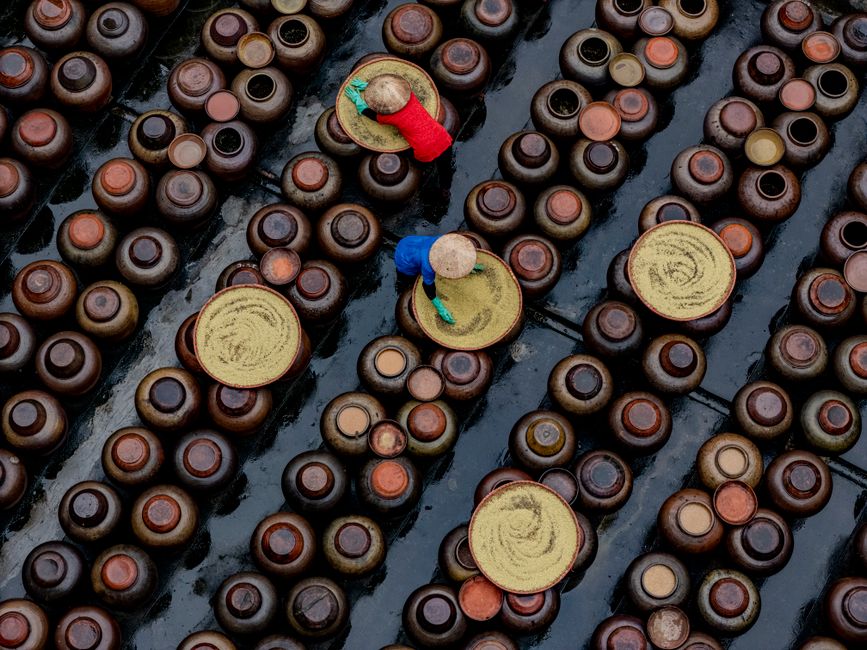
Hue was Vietnam’s imperial capital from 1802 to 1945, and its food still carries that legacy. The royal court demanded hundreds of small, intricate dishes per meal. That influence survives in Hue’s street food, which is more elaborate than anywhere else in the country.
The central region’s signature is bun bo Hue — a beef and pork knuckle noodle soup with lemongrass, shrimp paste, and enough chili oil to stain the broth deep red. It’s spicy in a way pho never is. The noodles are thicker and rounder. The broth is richer, oilier, more aggressive. Order it at Bun Bo Hue O Phuong in Hue, where a bowl costs 40,000 VND ($1.70) and includes a slab of pork blood cake floating in the broth.
Hue’s Royal Snacks
Hue is also the home of banh beo, banh loc, and banh nam — tiny steamed rice cakes topped with dried shrimp, pork, and crispy shallots. They’re served in small saucers, six or eight to an order. You eat them with a spoon, drizzling fish sauce over each one. These dishes were designed for royalty. Now they cost 30,000 VND ($1.25) per plate at street stalls near the citadel.
Central Vietnamese food is the spiciest in the country. Hue locals eat fresh chili with almost everything. If you’re sensitive to heat, ask for “khong cay” (no spicy) before the cook adds chili to your bowl. They will add chili. Default is spicy.
Hoi An’s Three Dishes You Can’t Find Anywhere Else
Hoi An is a small city with an outsized culinary reputation. Three dishes here are genuinely unique — you won’t find them in Hanoi or Saigon, and attempts to replicate them elsewhere fail.
| Dish | What It Is | Where to Eat | Price (VND) |
|---|---|---|---|
| Cao lau | Thick, chewy noodles made with water from a specific well, topped with sliced pork, crispy croutons, and herbs. No broth. | Ba Le Well, Hoi An | 35,000 |
| Mi quang | Turmeric-yellow rice noodles in a shallow, concentrated broth with shrimp, pork, quail egg, and crushed peanuts. | Mi Quang Ba Mua, Hoi An | 40,000 |
| White rose dumplings | Translucent rice-paper dumplings shaped like flowers, filled with shrimp, topped with crispy garlic. | White Rose Restaurant, Hoi An | 70,000 |
The cao lau noodle’s chewiness comes from lye water mixed with ash from a specific tree on Cham Island. Locals claim the dish can’t be made anywhere else because the water source matters. That’s partly marketing, but the texture is genuinely distinct — denser and more elastic than any other Vietnamese noodle.
Saigon and the South: Sweet, Fresh, and Built for the Heat
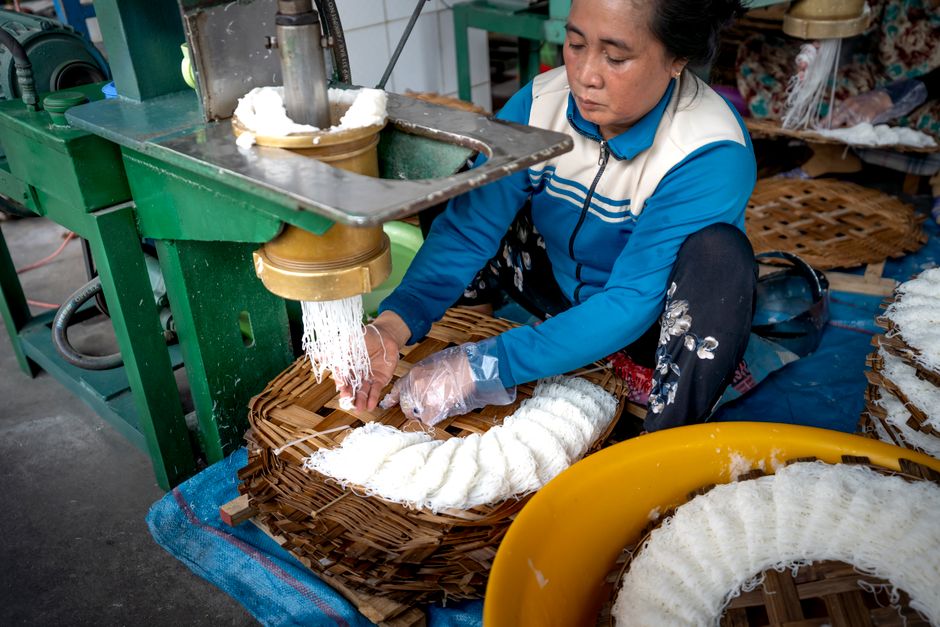
Southern Vietnamese food is a different cuisine wearing the same national flag. The climate is hot year-round, so food is lighter, sweeter, and served with more raw herbs and vegetables. Coconut milk appears in curries and desserts. Sugar sneaks into savory dishes. Fish sauce is dialed back and replaced with sweeter dipping sauces.
Saigon’s most underrated dish is com tam — broken rice with grilled pork chop, shredded pork skin, a steamed egg meatloaf, and sweet fish sauce. It’s street food at its most complete: one plate contains protein, fat, carbs, herbs, and a fried egg if you order it “op la.” Com Tam Ba Ghien in District 3 serves a legendary version for 85,000 VND ($3.60), and the line stretches down the block at lunch.
What to Eat in Saigon
- Banh xeo — a crispy turmeric crepe folded around shrimp, pork, and bean sprouts. Wrap pieces in lettuce with herbs, dip in sweet fish sauce. The southern version is larger and crispier than the central version, which is smaller and chewier.
- Hu tieu Nam Vang — a clear pork and seafood noodle soup inherited from Chinese-Cambodian cooks. Lighter than pho, with a cleaner broth and more varied toppings.
- Goi cuon — fresh spring rolls with shrimp, pork, herbs, and vermicelli wrapped in rice paper. The peanut dipping sauce is thicker and sweeter in the south.
Saigon’s food scene moves fast. New restaurants open weekly. Old street stalls disappear when the owner retires. The best strategy: walk through District 3 or Phu Nhuan around 6 PM, look for the stall with the most plastic stools, and order whatever the person next to you is eating.
Street Food Safety: What Actually Gets Travelers Sick
The biggest food-safety risk in Vietnam isn’t the street food. It’s the ice. Ice in Vietnam is made from filtered water and is generally safe — the government regulates ice production. The real risks are raw herbs washed in unfiltered water and food that’s been sitting at room temperature for hours.
Here’s what actually matters:
- Eat where locals eat. High turnover means food hasn’t been sitting. A busy stall at 7 PM is safer than an empty restaurant at 3 PM.
- Watch the cook’s hands. If the person handling money is also handling food without washing, walk away.
- Avoid pre-cut fruit from street carts. The fruit itself is fine. The knife and cutting board may not be.
- Bottled water only. Brands like La Vie and Aquafina are everywhere and cost 10,000 VND ($0.40).
Traveler’s diarrhea hits most visitors at some point, usually in the first week. The culprit is usually unfamiliar bacteria, not poor hygiene. Your gut needs time to adapt. Carry loperamide (Imodium) and oral rehydration salts. If symptoms last more than three days or include fever, find a clinic — healthcare for travelers in Vietnam is inexpensive and generally good in major cities.
How to Build a Food Itinerary Without Burning Out
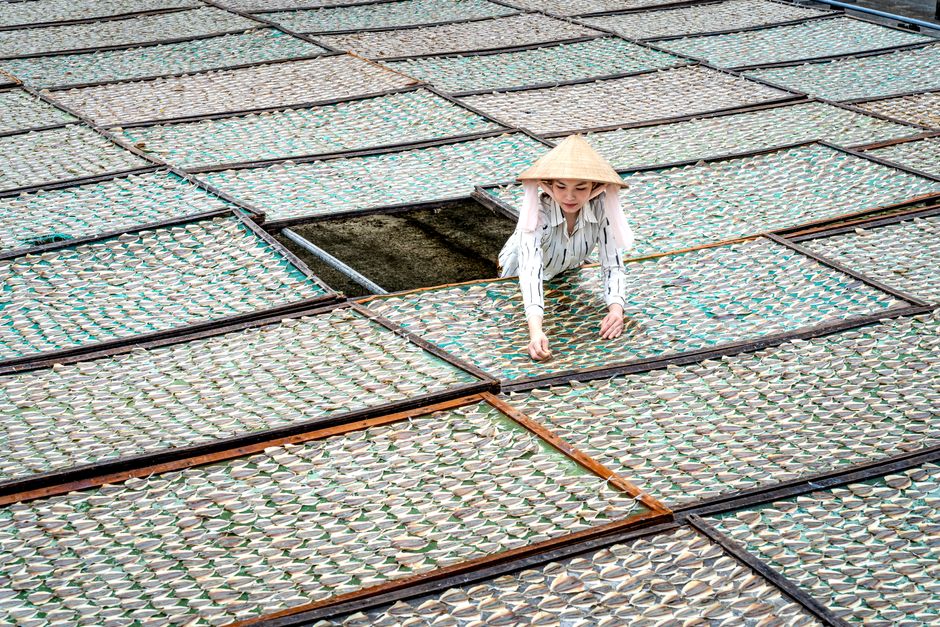
Eating through Vietnam is a marathon, not a sprint. The mistake most travelers make is trying to hit every famous dish in every city in two weeks. You end up eating six meals a day, losing your appetite by day four, and missing the best meals because you’re too full to care.
My rule: two food-focused activities per day, maximum. One planned meal at a specific restaurant, one street food walk where you follow crowds. The rest of the day, eat whatever’s nearby when you’re hungry. This keeps the trip from becoming a chore.
For a two-week trip, this route works:
- Days 1-4: Hanoi. Bun cha, cha ca, banh cuon, pho for breakfast at least once. Take a food tour on day one to orient yourself.
- Days 5-7: Hue. Bun bo Hue, royal snacks, vegetarian food at Buddhist temples.
- Days 8-10: Hoi An. Cao lau, mi quang, white rose dumplings. Take a cooking class if you want to learn techniques.
- Days 11-14: Saigon. Com tam, banh xeo, hu tieu, plus whatever new restaurants look busy.
Skip Da Nang for food unless you’re already there for the beach. The city’s food scene is fine but not distinct — it’s a blend of Hoi An and Hue dishes without the authenticity of either.
What to Bring Home: Ingredients Worth Packing
Vietnamese food is hard to replicate at home without the right ingredients. The good news: most of them are shelf-stable and cheap in Vietnam.
Buy these at any supermarket in Hanoi or Saigon:
- Fish sauce — Red Boat or Phu Quoc brands are widely exported, but the Vietnamese domestic versions (like Chin Su) are cheaper and more complex. A 500ml bottle costs 40,000 VND ($1.70).
- Dried rice noodles — Pho noodles, bun (vermicelli), and banh hoi all travel well. They last a year in the pantry.
- Shrimp paste (mam tom) — The fermented paste that gives bun bo Hue its depth. It smells like a fishing dock, but a tiny spoonful transforms a broth.
- Vietnamese coffee — Trung Nguyen and Nguyen Coffee Supply both sell robusta beans with the distinctive chocolatey bitterness that makes Vietnamese iced coffee work.
The one thing you can’t bring home: the herbs. Vietnamese food depends on fresh rau ram, perilla, Thai basil, and sawtooth coriander that wilt within hours of purchase. This is why the food tastes different in Vietnam — not because of technique, but because the herbs are picked that morning and served that afternoon.
That’s the real lesson from six weeks of eating through Vietnam. The recipes matter, but the freshness matters more. A bowl of bun cha in Hanoi tastes the way it does because the herbs were cut at 5 AM, the pork was ground at 6 AM, and the broth was made from bones that simmered overnight. You can learn the techniques. You can buy the ingredients. But you can’t replicate that timing unless you’re there.
So go. Eat the pho and the banh mi. Then order the bun cha, the cao lau, and the com tam. That’s where the country’s food actually lives.