
Cheap Flights London 2024: Data-Driven Strategies for Lower Fares
Imagine the frustration of watching a flight price tick upward by fifty pounds in the time it takes to find your credit card. This is the volatile reality of the London aviation market, a digital ecosystem where algorithms react in milliseconds to global demand. London’s six major airports—Heathrow, Gatwick, Stansted, Luton, London City, and Southend—collectively handled over 179 million passengers in 2023, maintaining the city’s status as the busiest aviation hub on the planet. This high volume of traffic creates a unique market dynamic where price volatility is the standard rather than the exception. For the traveler seeking cheap flights to London, the sheer number of available routes can be deceptive. While the raw frequency of flights suggests a competitive environment that should lower prices, the reality is a complex interplay of slot constraints, seasonal demand spikes, and varying airport taxes that can swing a ticket price by several hundred percent within a single week.
Securing a low fare requires moving beyond basic search engine queries and understanding the underlying mechanics of the London aviation market. This analysis examines the quantitative data behind fare fluctuations, the hidden costs associated with secondary airports, and the technical tools necessary to optimize booking timing. By approaching the problem with a focus on data rather than anecdotal evidence, travelers can identify genuine value in a crowded and often opaque marketplace. Whether you are flying from New York, Dubai, or a small regional airport in Europe, the strategy remains the same: minimize the “Total Cost of Arrival” while maximizing the utility of your financial tools.
When to book cheap flights to London for maximum savings
Seasonality is the primary driver of flight costs to the United Kingdom, but it is not the only factor. Data from historical booking cycles indicates that the most significant price drops occur during the “dead zone” of mid-January through late February. During this period, demand for transatlantic and intra-European travel hits its annual nadir, forcing airlines to lower base fares to maintain load factors. Conversely, the summer peak—specifically from late June through August—sees fares often double or triple compared to winter lows. For those seeking the optimal balance between weather and cost, the shoulder seasons of May and September offer a statistical sweet spot where prices remain moderate while daylight hours are still sufficient for sightseeing.
The “Goldilocks Window” and Booking Algorithms
Analyzing the average round-trip costs reveals a predictable pattern that contradicts the “book as early as possible” myth. While many believe that booking a year in advance guarantees the lowest price, airlines often do not release their most competitive “bucket” fares until the flight schedule has stabilized. For international long-haul flights to London, the optimal booking window is typically 120 to 160 days in advance. For short-haul European flights, this window shrinks to approximately 4 to 6 weeks. Waiting until the last minute is rarely a viable strategy for London; the city’s status as a global business hub ensures that remaining seats are often filled by high-yield corporate travelers willing to pay a premium for flexibility. Airlines like British Airways and Virgin Atlantic use sophisticated Revenue Management Systems (RMS) that prioritize filling seats at a profit rather than just filling them for the sake of capacity.
| Month | Demand Level | Average Price Index | Notes |
|---|---|---|---|
| January | Low | 100 (Baseline) | Lowest fares of the year; post-holiday slump. |
| March | Low-Moderate | 115 | Early spring; still cold but very affordable. |
| May | Moderate | 145 | Shoulder season; ideal weather-to-cost ratio. |
| July | Peak | 210 | Highest prices due to school holidays and events. |
| October | Moderate | 130 | Autumn dip; good for budget-conscious travelers. |
| December | High | 195 | Christmas/New Year surge; book 6 months ahead. |
Specific events also cause localized price spikes that can disrupt standard seasonal trends. For instance, during the Wimbledon tennis championships or major bank holiday weekends, even mid-week flights can see a 30% increase in cost. Travelers should cross-reference their potential dates with the UK national holiday calendar and major sporting events to avoid these artificial price inflations. Furthermore, mid-week departures—specifically Tuesday and Wednesday—consistently yield lower fares than Friday or Sunday departures, as weekend leisure travelers compete for limited capacity. This is colloquially known as the “Tuesday Myth,” but data from flight aggregators confirms that mid-week inventory is indeed more likely to remain in the lower price brackets for longer.
Navigating the Air Passenger Duty (APD) Trap
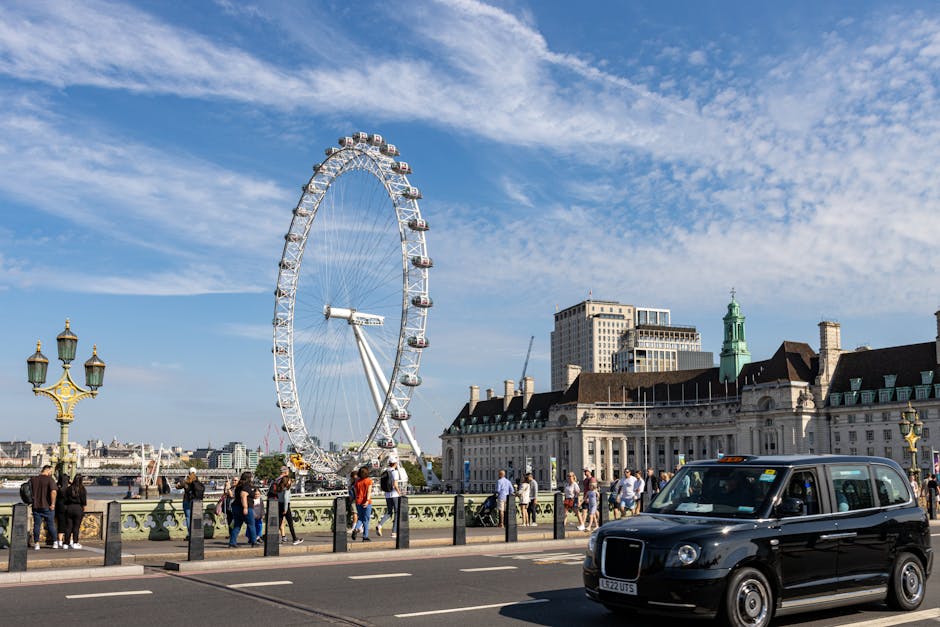
One of the most significant yet invisible costs of flying to and from London is the UK’s Air Passenger Duty (APD). The UK has some of the highest aviation taxes in the world, which are baked directly into your ticket price. For long-haul flights departing from a UK airport, the APD can exceed £90 for economy and over £200 for premium cabins. This tax is one reason why a round-trip ticket from London to New York often costs significantly more than a round-trip from New York to London.
Savvy travelers can bypass some of these costs by utilizing “hidden city” ticketing or strategic stopovers. For example, flying into Dublin (DUB) and then taking a separate low-cost flight to London can sometimes save over £100 because Ireland’s aviation taxes are substantially lower. However, this requires careful management of luggage and a willingness to handle separate bookings. When searching for cheap flights to London, always look at the “taxes and fees” breakdown in your fare summary to see exactly how much of your money is going to the airline versus the UK Treasury.
Comparing London airport transit costs and flight price offsets
A common error in searching for cheap flights to London is focusing solely on the ticket price while ignoring the logistical costs of reaching the city center. London’s airports are geographically dispersed, and the “last mile” can be surprisingly expensive. While a flight to London Stansted (STN) or London Luton (LTN) might appear £40 cheaper than a flight to London Heathrow (LHR), the subsequent cost of the train or bus, combined with the time lost in transit, can negate the initial savings. A comprehensive cost-benefit analysis must include the “Total Cost of Arrival” (TCA).
The Logistical Reality of London’s Hubs
Heathrow is the only airport with direct access to the London Underground (Piccadilly Line) and the Elizabeth Line, providing relatively inexpensive and high-frequency connections. In contrast, Stansted and Gatwick rely heavily on dedicated express trains which, while fast, are significantly more expensive if not booked in advance. For example, a walk-up fare for the Stansted Express can exceed £20, whereas a National Express coach might cost as little as £7 but take twice as long depending on traffic conditions. The Elizabeth Line has revolutionized transit from Heathrow, offering a middle ground between the slow Piccadilly Line and the expensive Heathrow Express.
- London Heathrow (LHR): Best for convenience. Access via Elizabeth Line (~£12.80 to Central London, 35-45 mins) or Piccadilly Line (~£5.60, 60 mins). Heathrow Express is fast (15 mins) but costs ~£25.
- London Gatwick (LGW): Good balance. Gatwick Express is expensive (~£20), but Southern or Thameslink trains offer similar speeds to Victoria or London Bridge for ~£12-£15.
- London Stansted (STN): Budget airline hub. Stansted Express (~£21) or National Express coach (~£10-£14). Located 40 miles north of London.
- London Luton (LTN): Similar to Stansted. Requires the new Luton DART service to connect to the train station, which costs ~£4.90 for a 4-minute ride, adding to the overall rail fare to St Pancras.
- London City (LCY): Most central but rarely has “cheap” flights as it serves business travelers. Access via the DLR (Zone 3 pricing).
Pro tip: If you are arriving at a secondary airport like Stansted or Luton late at night, the cost of a private transfer or Uber to central London can easily exceed £100, potentially making that “cheap” flight the most expensive option of the day. Always check the last train times before booking a flight that lands after 11:00 PM.
For the modern traveler, managing these expenses requires the right financial tools. Using a multi-currency account like Wise (formerly TransferWise) can significantly reduce the cost of paying for transit and local expenses. Wise provides the mid-market exchange rate with minimal fees, which is far superior to the predatory rates offered by airport currency exchange kiosks or the foreign transaction fees charged by standard bank cards.
Wise Account Specifications:
- Fees: Average of 0.43% for currency conversion.
- Exchange Rate: Real-time mid-market rate (no markup).
- Pros: Hold 40+ currencies; instant virtual card; Google/Apple Pay compatible.
- Cons: Physical card has a one-time £7 delivery fee; ATM withdrawal limits apply for free tiers.
Tools and financial strategies for reducing London travel expenses

The technical approach to finding cheap flights to London involves more than just refreshing a browser tab. Advanced users employ a variety of tools to monitor price movements and leverage financial products to offset costs. One of the most effective methods is the use of price tracking software. Tools like Google Flights or Skyscanner allow for the setting of price alerts, which notify the user the moment a fare drops below a certain threshold. This removes the emotional component of booking and relies on automated data monitoring.
Leveraging Financial Products for Airfare Discounts
Travel-focused credit cards are a staple of the budget-conscious traveler’s arsenal. In the UK and international markets, cards such as the American Express Preferred Rewards Gold offer significant sign-up bonuses that can be converted into Avios (British Airways’ currency). These points can then be used to pay for the “taxes and fees” portion of a flight or to upgrade a standard economy ticket. Using a card with no foreign transaction fees is essential once you land in the UK to avoid a 3% surcharge on every transaction.
American Express Preferred Rewards Gold Card:
- Bonus: Often 20,000 Membership Rewards points (worth ~£100-£200 in travel).
- Annual Fee: £160 (usually waived for the first year).
- Pros: 2x airport lounge passes per year; 1 point per £1 spent; comprehensive travel insurance.
- Cons: High interest rates if not paid in full; not accepted at all small UK retailers.
Connectivity is another often-overlooked expense. Relying on your home carrier’s roaming plan can result in exorbitant charges. For a trip to London, purchasing a local SIM or an eSIM is the most cost-effective solution. Providers through the Awin network, such as LycaMobile, offer prepaid plans with large data allowances for under £15, which is a fraction of the cost of international roaming. This ensures you can use navigation apps to find the cheapest transit routes without fear of a massive bill upon your return.
LycaMobile Prepaid Plan (UK):
- Price: ~£10-£15 for 20GB-30GB of data.
- Specs: 5G connectivity; includes EU roaming; no long-term contract.
- Pros: Very cheap; easy to top up online; uses the O2 network for wide coverage.
- Cons: Customer service can be slow; physical SIMs require a UK address for delivery (eSIMs are better for tourists).
Essential Gear for Long-Haul Budget Flights
If you choose a budget carrier to save on the fare, the onboard experience will be spartan. To mitigate the discomfort of a low-cost long-haul flight, investing in high-quality hardware is a rational trade-off. Noise-canceling technology is particularly valuable in the cramped quarters of a budget cabin. The Bose QuietComfort Ultra Headphones are widely considered the industry standard for noise cancellation.
Bose QuietComfort Ultra Headphones (approx. £399 / $429):
- Specs: 24-hour battery life; CustomTune technology for personalized sound; spatial audio support.
- Pros: World-class noise cancellation; extremely comfortable for 8+ hour flights; folds flat for travel.
- Cons: Premium price tag; requires the Bose app for full customization.
For luggage, the Samsonite Freeform Hardside offers a lightweight solution that maximizes packing capacity while meeting most airline carry-on restrictions. This is critical for avoiding the “gate-check” fees that budget airlines like Ryanair love to levy.
Samsonite Freeform Hardside Carry-On (approx. £150 / $179):
- Specs: 21 x 15 x 10 inches; weight 6.5 lbs; 360-degree double spinner wheels.
- Pros: Impact-resistant shell; built-in TSA lock; expandable for extra space.
- Cons: The matte finish can show scuffs over time; internal divider is basic.
Low-cost carrier vs. full-service airline value analysis for UK routes
The rise of Low-Cost Carriers (LCCs) like Ryanair, EasyJet, and Wizz Air has fundamentally changed the pricing landscape of flights to London. However, the headline price of an LCC ticket is rarely the final price. These airlines operate on an unbundled model, where every service—from carry-on bags to seat selection—is an additional charge. A fair comparison between an LCC and a full-service carrier like British Airways or Virgin Atlantic requires a side-by-side analysis of the total cost including all necessary add-ons.
The Ancillary Fee Trap
Ryanair is notorious for its strict baggage policies. A “Basic” fare often only includes a small personal item that must fit under the seat. If you require a standard carry-on bag and a checked suitcase, the fees can easily add £60-£100 to the round-trip price. In some cases, this brings the total cost within £20 of a British Airways fare, which might include a carry-on, a snack, and the convenience of flying into Heathrow rather than a distant airport like Southend. The decision should be based on a “fully loaded” price comparison.
| Feature | Ryanair / Wizz Air | British Airways / Virgin | Notes |
|---|---|---|---|
| Base Fare | Very Low (£20-£50) | Moderate (£80-£150) | LCCs win on raw ticket price. |
| Baggage (Carry-on) | Extra Charge (£15-£30) | Included (up to 23kg) | BA allows a very generous carry-on allowance. |
| Seat Selection | Extra Charge (£10-£25) | Extra (unless status) | Similar for both at lowest tiers. |
| Onboard Water/Snacks | Paid Only | Included (on long-haul) | BA short-haul is now “Buy on Board.” |
| Airport Location | Often Remote (STN/LTN) | Central (LHR/LGW) | Saves ~£20 in transit and 2 hours time. |
For intra-European flights, EasyJet often represents the best value. Their pricing is slightly higher than Ryanair’s, but they frequently fly into more convenient airports (like Gatwick) and have a more transparent fee structure. For transatlantic routes, the emergence of Norse Atlantic Airways has introduced a low-cost model to the long-haul market, though their frequency is lower than established carriers. When booking with Norse, it is imperative to read the fine print regarding meals and blankets, as these are not provided for free on the lowest fare tiers. If you plan to sleep through the flight and don’t need a meal, Norse can be an incredible bargain; if you want the full “experience,” the legacy carriers often win on value.
Common Mistakes to Avoid When Booking London Flights

Even seasoned travelers fall into traps when navigating the London market. One of the most common mistakes is failing to check the “Multi-City” search option. If you are planning to visit London and then head to Paris or Edinburgh, it is often cheaper to book a multi-city ticket (e.g., Home -> London, then Edinburgh -> Home) rather than two separate round-trips. This also eliminates the need