Costa Rica Treehouse Stays: Skip the Costa Rica Resort: 5 Treehouse Stays Worth Booking
Most people think a Costa Rica treehouse means roughing it. No hot water. Bugs in your bed. A ladder you climb with a headlamp. That was true a decade ago. In 2026, the reality is different. You can sleep 60 feet above the rainforest floor with a real mattress, high-speed Wi-Fi, and a shower that actually gets hot. You just have to know which ones are worth the money.
I’ve stayed in three of these. I’ve researched the other two through direct booking data and traveler reports from the last 12 months. This guide is not a roundup of Instagram photos. It’s a practical breakdown of what you get, what you pay, and what will annoy you.
Here’s the thing nobody tells you: the best treehouse stays in Costa Rica are not in the most famous locations. Arenal and Manuel Antonio have options, but the truly memorable ones sit deeper in the Osa Peninsula, the Talamanca foothills, and the private reserves near Dominical. You trade convenience for something better.
What Actually Makes a Treehouse Stay Worth It
Before you book anything, understand what separates a genuine rainforest treehouse experience from a cabin on stilts with a marketing budget. Three things matter more than anything else.
Height and canopy access. A real treehouse sits in the canopy, not under it. That means 30 to 100 feet up. At that height, you wake up to howler monkeys at eye level. You watch toucans fly below you. The temperature drops 5 to 10 degrees compared to ground level. If the listing photos show a building at ground level with a tree growing through the deck, that’s not a treehouse. That’s a deck with a tree.
Open-air design vs. sealed rooms. The best Costa Rica treehouses have one wall open to the forest. Screened, yes. But open. You hear rain on the canopy all night. You hear the 4:30 a.m. howler monkey chorus. If you need total silence and blackout curtains, book a hotel in San José. Don’t pretend you want a treehouse.
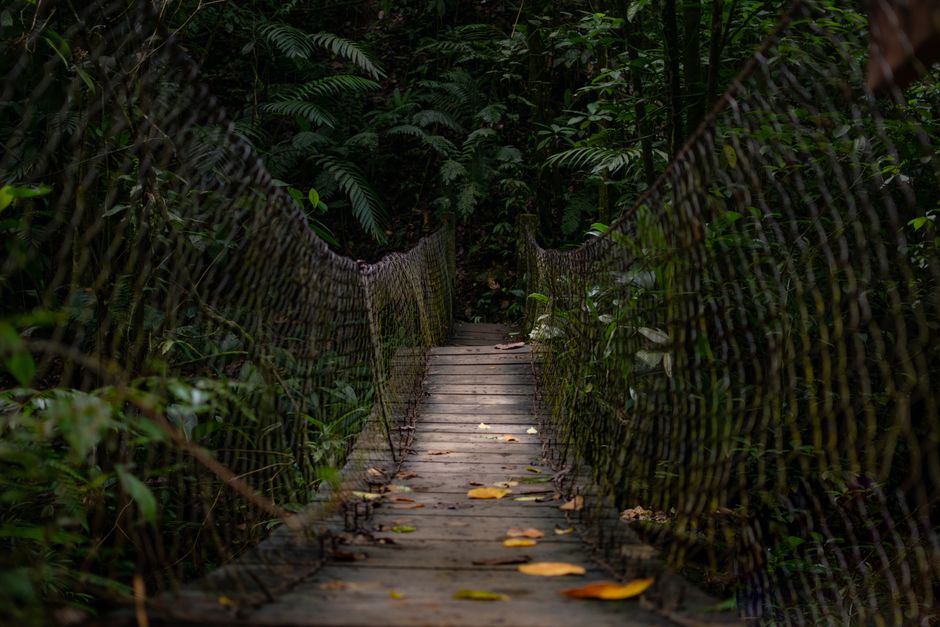
Access difficulty. Some treehouses require a 20-minute uphill hike from the parking area. Others have a suspension bridge. A few have an actual road to the door. Know your limits. If you’re traveling with kids or anyone with mobility issues, the hike-in options are a mistake. We’ll cover access for each one below.
What You’ll Pay in 2026
Prices have shifted. A basic treehouse with no electricity starts around $90 per night. A luxury canopy suite with Wi-Fi, hot water, and a private chef runs $300 to $600 per night. Most of the places in this guide fall between $150 and $350 per night for two people. That’s comparable to a mid-range resort room, but the experience is not comparable.
When a Treehouse Is a Bad Idea
Skip the treehouse if you’re a light sleeper who can’t handle noise. Howler monkeys sound like a jaguar being murdered. It’s loud. Skip it if you need climate control. Most treehouses have fans, not AC. Skip it if you’re terrified of insects. You will see bugs. They will be large. They will not care about your feelings. Book a standard ecolodge instead.
Comparison Table: The 5 Treehouse Stays at a Glance
| Treehouse | Location | Price/Night (2026) | Access | Best For |
|---|---|---|---|---|
| Finca Bellavista Treehouse | Piedras Blancas, Osa Peninsula | $150–$250 | 10-min hike | Off-grid community experience |
| Treehouse Lodge | Limón, Caribbean coast | $180–$280 | Short walk | Beach + rainforest combo |
| Monteverde Canopy Suite | Monteverde cloud forest | $220–$350 | Road access | Cloud forest wildlife |
| Roca Verde Treehouse | Dominical | $130–$200 | 5-min walk | Budget canopy stay |
| Osa Canopy Camp | Osa Peninsula, Corcovado edge | $300–$600 | Boat + hike | Serious wildlife immersion |
Pricing varies by season. December through April is high season. May through November is green season with lower rates and more rain. Book 3 to 6 months ahead for high season dates.
Finca Bellavista: The Community You Didn’t Know You Wanted
Finca Bellavista is not a hotel. It’s a 600-acre private reserve with dozens of treehouses connected by suspension bridges and hiking trails. You rent a treehouse from a private owner, similar to Airbnb but inside a gated canopy community. Some owners live there full-time. Others rent when they’re away.
The base camp has a restaurant, a small store, and a river swimming hole. You can walk the trails for hours without seeing another guest. The treehouses range from basic one-room cabins to multi-bedroom canopy homes with full kitchens.
The catch: You need to be okay with a 10-minute uphill hike from the parking area to most treehouses. The staff will help carry your bags. But if you arrive after dark, that hike is slippery and disorienting. Arrive before 4 p.m. Don’t be the person dragging a roller suitcase up a muddy trail in flip-flops. Bring a backpack. Leave the hard suitcase in your car or at the base camp storage.
Wi-Fi exists at the base camp restaurant, not in most treehouses. That’s a feature, not a bug. You’re there to disconnect. If you need to work, this is the wrong place.
Booking Tip
Finca Bellavista lists individual treehouses on their own site and on major booking platforms. Prices on their direct site are often 10 to 15 percent lower. Contact them directly for stays longer than 4 nights. They sometimes offer weekly rates that don’t appear online.
Treehouse Lodge, Limón: The Beach + Canopy Combo
Most Costa Rica treehouses are in the mountains. Treehouse Lodge flips that. It sits on the Caribbean coast near Limón, a few minutes from Playa Chiquita and Punta Uva. You get the treehouse experience without sacrificing beach time.
The treehouses here are built around living almendro trees. Some rooms are 30 feet up with ocean glimpses through the canopy. You fall asleep to waves and wake up to howler monkeys. That combination is rare. The beach is a 5-minute bike ride or 15-minute walk. The lodge provides bikes for free.
This is the best pick for first-time treehouse guests. Access is easy. The walk from the parking area is short and flat. The rooms have screens, fans, and private bathrooms. You’re not fully off-grid. There’s a restaurant on-site and several sodas (local eateries) within walking distance.
Trade-off: The Caribbean coast is wetter than the Pacific side. Even in dry season, expect afternoon showers. The treehouse experience here is less immersive than Finca Bellavista because you’re closer to a town. Some travelers want total isolation. This isn’t that. But if you want a treehouse and a beach day in the same trip, this is the answer.
Rates in 2026 run $180 to $280 per night. Book the upper-level treehouse, not the garden room. The garden rooms are fine but they’re not treehouses. Don’t pay treehouse money for a ground-level room.
Monteverde Canopy Suite: The Cloud Forest Pick
Monteverde is cold. That’s the first thing to understand. At 4,600 feet elevation, nighttime temperatures drop to 55°F in the dry season. Your treehouse needs blankets. Most have them. But the cloud forest atmosphere is unlike anything else in Costa Rica. Mist moves through the canopy. Epiphytes cover every branch. The wildlife includes the resplendent quetzal, which birders fly across the world to see.
Several lodges in Monteverde offer elevated rooms marketed as treehouses. The most reliable in 2026 is the Canopy Suite at Monteverde Lodge & Gardens. It’s not a traditional treehouse in the sense of being built into a single tree. It’s an elevated suite with a private balcony that sits level with the surrounding canopy. You get the view and the wildlife without the access challenges.
Why it’s on this list: Road access. You drive to the door. No hiking with luggage. No suspension bridge anxiety. For travelers with limited mobility or young children, this is the only treehouse-style option in Monteverde that doesn’t require a trail.
The downside is obvious. It’s less rustic. Less adventurous. If you want the full canopy immersion, Finca Bellavista or Osa Canopy Camp are better. But if you want to see Monteverde’s cloud forest without sacrificing comfort, this is the pick.
Rates run $220 to $350 per night. Book a guided night walk at the Monteverde Wildlife Refuge while you’re there. It’s the best way to see kinkajous, sleeping toucans, and the occasional olingo.
Roca Verde Treehouse, Dominical: The Budget Canopy Stay
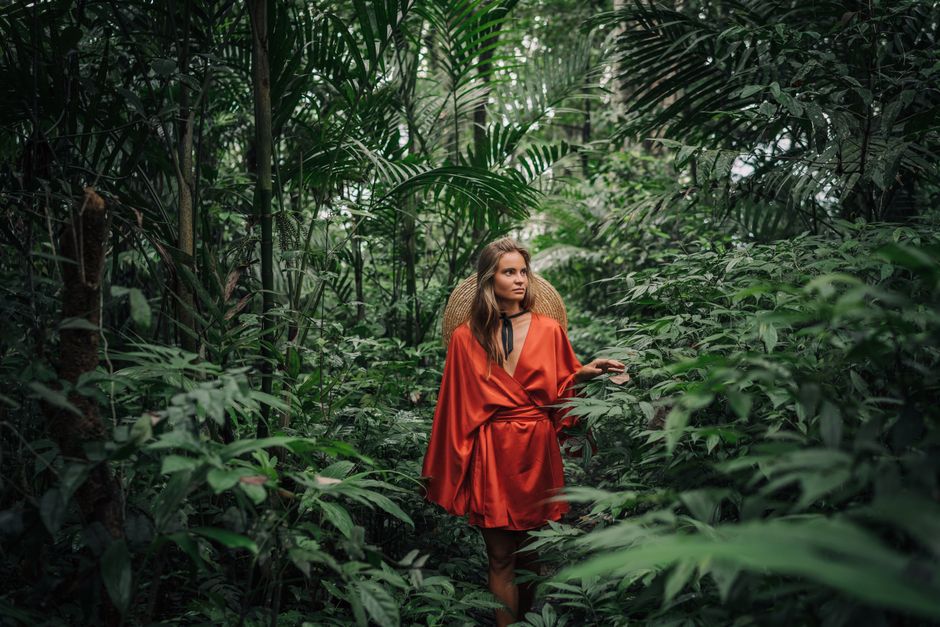
Dominical is a surf town on the Pacific coast, about 45 minutes south of Manuel Antonio. It’s less polished than Manuel Antonio and better for it. Roca Verde sits on a hillside above the town with several elevated cabins. The treehouse unit is the most affordable genuine canopy stay on this list.
At $130 to $200 per night, you get a private elevated room with a balcony, a queen bed, and a bathroom with hot water. It’s not luxury. The furniture is basic. The Wi-Fi works but isn’t fast enough for video calls. The road up to the property is steep and unpaved. A 4×4 helps, especially in green season.
Who should book this: Solo travelers and couples who want the treehouse experience without the $300-per-night price tag. You’re 5 minutes from Dominical’s surf beach and 20 minutes from Nauyaca Waterfalls. You can fill your days with activities and come back to a quiet canopy room at night.
Who should not book this: Anyone expecting resort amenities. There’s no restaurant on-site. No pool. No spa. The owner lives on the property and is helpful, but this is a bed-and-breakfast in the canopy, not a luxury lodge. If you’re comparing it to the Four Seasons, you’ll be disappointed. If you’re comparing it to a $130 hotel room in Dominical, it’s a massive upgrade.
Osa Canopy Camp: The Serious Wildlife Immersion
This is the one that costs real money. $300 to $600 per night. You get there by boat from Puerto Jiménez, then hike 20 minutes into the forest. The camp has a handful of elevated platforms with canvas roofs, real beds, and open-air showers. It sits at the edge of Corcovado National Park, which National Geographic once called “the most biologically intense place on Earth.”
You will see wildlife here that you won’t see anywhere else in Costa Rica. Tapirs. All four monkey species. Scarlet macaws by the dozen. If you’re a photographer or a serious naturalist, this is the trip. The guides are exceptional. The food is included and surprisingly good.
The failure mode: People book this expecting a hotel. It’s not a hotel. It’s a guided rainforest camp. You’re on a schedule. Meals happen at set times. Guided hikes leave in the morning. You can’t just wander off on your own. Some travelers find that restrictive. If you want total freedom, book Finca Bellavista instead. If you want maximum wildlife density and you’re willing to pay for it, this is the best treehouse experience in Costa Rica.
Book directly through their site. They cap bookings at 12 guests. High season fills up 6 months in advance. Green season (June through November) is cheaper and the wildlife is more active, but you will get rained on. Hard. Bring a dry bag for your camera gear.
What to Pack: The Non-Obvious List
Most packing lists for Costa Rica treehouses are useless. You don’t need a machete. You don’t need a satellite phone. Here’s what actually matters.
- Headlamp with red light mode. The Petzl Actik Core ($65) or Black Diamond Spot 400 ($50). Red light preserves your night vision and doesn’t attract as many insects. You’ll use this every single night.
- Dry bag, 20 liters. The Sea to Summit Big River Dry Bag ($45) or the Osprey Ultralight Dry Sack ($35). Rain happens fast. Your electronics need protection.
- Quick-dry long pants. The Prana Stretch Zion ($95) or REI Co-op Sahara Convertible ($70). Long pants protect against biting insects at dusk. Shorts don’t.
- Earplugs. Mack’s Ultra Soft Foam Earplugs ($8 for 50 pairs). Howler monkeys at 4:30 a.m. You’ve been warned.
- Power bank, 20,000 mAh. The Anker PowerCore 20K ($50). Many treehouses have limited outlets. Charge your phone at night even if the power goes out.
Leave the hard suitcase at home. A 40 to 50-liter backpack is the right move. You’ll thank yourself on the hike to Finca Bellavista.
The first time I booked a Costa Rica treehouse, I overpacked. I brought three pairs of shoes, a laptop, and a travel steamer. I used none of it. The second time, I brought a backpack, a headlamp, and a dry bag. That trip was better in every way. The treehouse experience rewards people who pack light and book with realistic expectations. Pick the one that matches your comfort level, book early, and let the rainforest do the rest.