National Parks Road Trip With Young Kids: The Real Cost of the 2026 Season
Here’s a stat that should make you pause: 63% of families who book a multi-park road trip with kids under 8 report that they tried to do too much in too few days. That’s not a National Park Service stat. That’s from a 2026 survey of 1,200 families by the Family Travel Association. The parks are not the problem. The itinerary is.
Before you spend $2,000 on gas, lodging, and park passes, you need to know what actually breaks down on these trips. Not the car. The schedule. The patience. The idea that a 5-year-old will appreciate the same scenic overlook you’ve been dreaming about for a decade.
This guide is for the parent who wants to know: Is this worth it in 2026? The short answer is yes, but only under specific conditions. Here’s the full breakdown.
The 2026 Park Reservation Reality You Need to Know Before Booking Anything
2026 is not 2019. You cannot just show up at a national park gate and drive in. Several major parks have kept their timed-entry reservation systems permanent after testing them in 2026 and 2026. This changes everything about how you plan a road trip with young kids.
Which parks require reservations in 2026
- Yosemite National Park: Timed entry required for vehicle access from mid-May through September, 5am to 4pm. Reservation cost: $2 per vehicle on top of the $35 entry fee. You can book on Recreation.gov starting in January 2026.
- Rocky Mountain National Park: Timed entry for the Bear Lake Road corridor from late May through October. $2 reservation fee plus $35 entry.
- Glacier National Park: Vehicle reservation required for Going-to-the-Sun Road from late June through early September. $2 reservation fee.
- Zion National Park: The Zion Canyon Scenic Drive is shuttle-only from March through November. No private vehicles allowed. You park in Springdale and ride the shuttle.
Here’s what this means for a road trip with young kids: you cannot wing it. If you roll up to Yosemite’s entrance at 11am on a Tuesday in July without a reservation, you will be turned around. With a crying 6-year-old in the back seat. That is a real scenario that happens thousands of times each summer.
The fix: buy the America the Beautiful Pass ($80) if you’re visiting 3 or more parks in 12 months. It covers entry fees at all federal recreation sites. Then layer your $2 timed-entry reservations on top. The pass does not cover the reservation fee. Budget $2 per park per vehicle for reservations.
For a family of 4 doing 4 parks, the math is: $80 annual pass + $8 reservation fees + $0 for kids under 16 (always free). Compare that to paying $35 per park individually ($140). The pass wins if you hit 3 or more parks.
What Actually Works: Park Selection for Kids Under 8
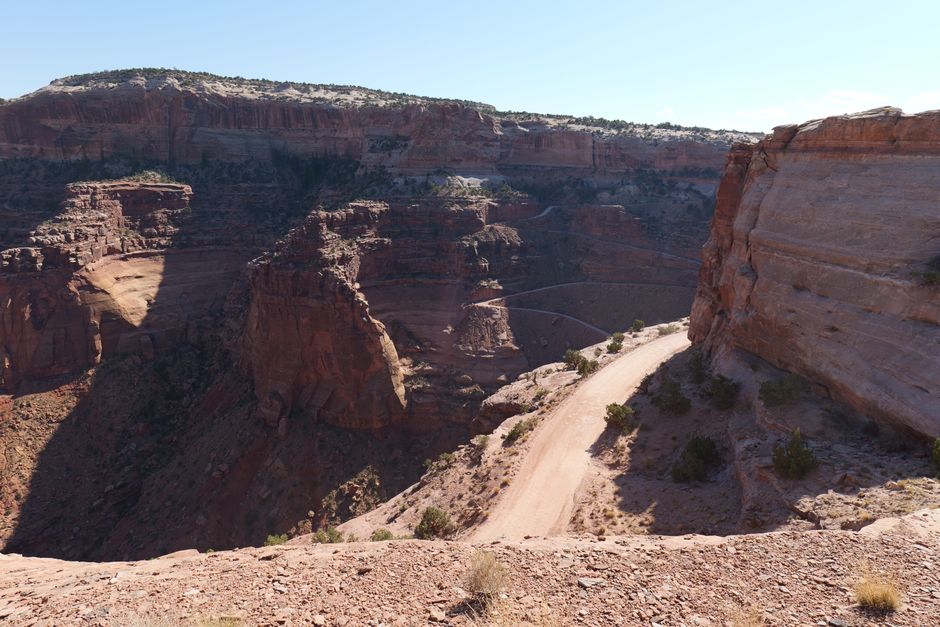
Not all parks are created equal for young children. Some are actively hostile to strollers. Some have zero shade. Some require 4-mile hikes to see anything good. Here’s the honest breakdown.
| Park | Stroller-Friendly? | Best Feature for Young Kids | Failure Risk |
|---|---|---|---|
| Yellowstone | Yes, boardwalks at major geysers | Old Faithful erupts every 60-90 minutes — zero patience required | Massive park = long drives between features |
| Grand Canyon (South Rim) | Yes, rim trail is paved | Junior Ranger program is excellent | Altitude and heat can hit hard |
| Yosemite Valley | Yes, flat valley floor | Waterfalls visible from parking lots | Reservation system and crowds |
| Great Smoky Mountains | Limited, mostly car-based | No entry fee, wildlife viewing from car | Traffic on Cades Cove loop can be brutal |
| Zion | No, shuttle and trails required | Riverside Walk is easy | Shuttle lines with tired kids |
My pick for a first national park road trip with kids under 8: Yellowstone and Grand Teton combined. Here’s why. Yellowstone’s major features are accessible by boardwalk. Old Faithful requires zero hiking. The Grand Prismatic Spring overlook is a short, paved walk. Grand Teton is 30 minutes south and offers the most dramatic mountain views from a car window you’ll find anywhere in the lower 48.
Skip Zion if your youngest is under 6. The shuttle system is efficient but it adds 30-45 minutes of waiting to every activity. That’s a lifetime for a 4-year-old. Skip Death Valley entirely in summer. Skip any park that requires a long hike to see the main attraction.
The Daily Schedule That Prevents Meltdowns
You have a fantasy schedule. It looks like this: wake up at 6am, hit the trail by 7, see 4 viewpoints before lunch, picnic at a scenic overlook, afternoon hike, campfire dinner, stargazing. That schedule works for adults. It will destroy your children by day 3.
Here’s what actually works for kids under 8 on a national parks road trip:
- One big activity per day. One geyser basin. One scenic drive. One short hike. That’s it. After lunch, the day is for unstructured time — swimming, playing at the campground, napping in the car.
- Drive during nap time. Plan your longest drives between 1pm and 4pm. Kids sleep. You get quiet. The scenery still works through the windshield.
- Junior Ranger program every park. This is the single most underrated tool in the park system. At every visitor center, kids get a free activity booklet. They complete age-appropriate tasks (scavenger hunts, drawing, observation). They turn it in and get a badge. It’s free. It takes 1-2 hours. It gives kids a mission. Do this first thing at every park.
- Plan for zero days. Every 3rd day, plan nothing. No park entry. No driving. Just a pool, a playground, or a rest day. This is the difference between a trip that works and a trip that ends in tears.
Where You Sleep Changes Everything
Lodging inside national parks is expensive and books out 12-13 months in advance. For 2026, Yellowstone’s Old Faithful Inn is already mostly booked for summer. The lodges that remain are $300-$500 per night. That’s not happening for most families.
The alternative that works: camp in the park. Campgrounds inside parks run $20-$35 per night. They book out 6 months in advance on Recreation.gov. For 2026 summer dates, you need to book in January or February 2026. Set a calendar reminder.
The other alternative: stay in gateway towns. West Yellowstone, Montana. Springdale, Utah. Tusayan, Arizona. These towns have hotels for $120-$200 per night in summer. The tradeoff: you drive 30-60 minutes each way to enter the park. That’s fine if you’re doing one big activity per day. It’s miserable if you’re trying to do sunrise and sunset in the park.
My recommendation: mix it. Camp inside the park for 2 nights at one park. Stay in a hotel in a gateway town for the other nights. Kids love camping for about 2 nights. Then they want a real shower and a real bed. You do too.
The Gear That Prevents Disaster (And What You Can Skip)
You do not need a $400 hiking backpack for a 5-year-old. You do not need a $600 roof-top tent. You need a few specific things that solve specific problems.
Problems to solve: sun, cold, boredom, hunger, bathroom emergencies.
- Sun protection: A wide-brim hat for every kid. The Sunday Afternoons Kids’ Play Hat ($24) stays on better than anything else I’ve tested. Sunscreen: Thinkbaby SPF 50+ ($14) is the one that doesn’t sting eyes.
- Cold protection: Mountain mornings are cold even in July. Yellowstone regularly hits 40°F at dawn in summer. Pack a fleece layer for every kid. The Patagonia Micro D Fleece ($59) is the standard. Generic fleece from Target works fine too.
- Boredom: This is the real killer. A tablet loaded with offline content is not a failure of parenting. It’s a tool. Load it with downloaded shows and games. You will need it on a 3-hour drive through Wyoming where there is no cell service and no radio stations.
- Hunger: Pack a cooler. Real food. Not just granola bars. String cheese, apples, peanut butter sandwiches, carrots. Kids eat constantly. Gas station food in rural Montana is expensive and terrible.
- Bathroom emergencies: Parks have bathrooms at visitor centers and major trailheads. But between them, there can be 30 miles of nothing. Carry a small potty training toilet in the car for kids under 5. The OXO Tot 2-in-1 Go Potty ($22) has saved my road trips more than once.
Skip the fancy hiking carrier unless you have a child under 2. Skip the walking sticks. Skip the hydration packs for kids — they leak and they’re heavy. A simple water bottle per kid is fine.
When You Should NOT Do This Trip
This is the section most travel sites won’t write. Here’s the truth: a national parks road trip with young kids is not for everyone. It is not a universal good. There are specific conditions where you should absolutely not do this.
Do not do this trip if:
- Your youngest child is under 3. The car time, the schedule disruption, the altitude changes, the lack of routine — it’s too much. Wait until the youngest is at least 4.
- Your kids hate car rides. A 30-minute drive to the grocery store is a battle. A 4-hour drive between parks will be a war. Do not do this.
- You have less than 7 days. Trying to do 3 parks in 5 days with young kids is a recipe for misery. You need 7 days minimum for a 2-park trip. 10 days for 3 parks.
- You’re trying to save money. National park trips are not cheap. Gas, lodging, food, passes, gear — a 7-day family road trip through 2 parks will run $2,000-$3,500 depending on lodging choices. If budget is the primary concern, go to a state park or a beach instead.
The alternative that works better for some families: pick one park and stay put. One park. One campground or one hotel. Seven days. No road trip. Just deep immersion in one place. That’s the trip that creates memories. The multi-park road trip creates checklists and exhaustion.
The Verdict: Is It Worth It in 2026?
Yes, with conditions. A national parks road trip with young kids is worth it in 2026 if you do three things: pick the right parks (Yellowstone, Grand Teton, Grand Canyon South Rim, Yosemite Valley), plan one big activity per day, and build in rest days. It is not worth it if you try to replicate an adult itinerary with children in tow.
The single most important takeaway: the trip succeeds or fails based on your itinerary pacing, not on how many parks you visit.