Family Vacation Destinations Near Me: Family Vacation Planning Mistakes That Waste Your Money
Searching for “family vacation destinations near me” usually means you want two things: low stress and a price that doesn’t make you wince. Most people fail on both counts. They don’t pick the wrong destination. They pick the right destination at the wrong time, with the wrong booking method, and they pay a premium for it. The destination matters less than the structure of the trip. A mediocre lake house booked correctly beats a dream resort booked badly.
I spent a week comparing booking platforms, school calendars, and pricing data to figure out where the money actually leaks. The answer is rarely the gas tank. It’s the timing and the platform fees.
The 3-Hour Radius Rule: Why “Near Me” Is a Trap
When you type “family vacation destinations near me,” the map shows you a hundred pins. That’s the trap. The algorithm shows you popular spots, not good spots. Popular spots near major cities—think Lake Geneva in Wisconsin or the Poconos in Pennsylvania—price themselves for demand, not for quality.
The real move is to define “near” by drive time, not by distance. A 3-hour drive is the sweet spot for a family with kids under 12. It’s long enough to feel like a trip, short enough that you don’t burn a day of vacation on travel. But here’s the key: look at the 3-hour ring on a map, then cross off the top 5 most famous towns in that ring. Those are the ones with surge pricing on Airbnb and $40 parking fees.
What to look for instead
A town with a mediocre public beach and a good library. A state park campground with a shower block. A county fairground with a weekend event. These places have the same weather and geography as the famous spots but cost 40-60% less. The kids don’t know the difference between a famous lake and a quiet one. They want water, ice cream, and a place to run.
Check the local chamber of commerce website for event calendars. Small towns list everything there—pancake breakfasts, tractor pulls, free concerts. Those events are the actual vacation. The destination is just a backdrop.
Booking Platform Fees: The Invisible 15% Tax

This is where the money vanishes. You find a cabin for $200 a night on Airbnb. By checkout, it’s $260. Cleaning fee, service fee, occupancy tax. You just paid a 30% premium for the privilege of using an app.
Here’s the fix that actually works: use the big platforms to discover properties, then book direct. Find a cabin you like on Airbnb or Vrbo. Copy the property name. Search for it on Google. Many property managers have their own websites with direct booking. You skip the platform service fee entirely, which is often 14-17%.
| Booking Method | Typical Fees | Total Cost for a $200/night Stay (3 nights) |
|---|---|---|
| Airbnb / Vrbo | 14-17% service fee + cleaning fee | $780 – $810 |
| Direct booking with property manager | 0% service fee + cleaning fee | $660 – $690 |
| Local motel or state park lodge | Tax only | $620 – $650 |
The direct booking route saves you $100-$150 on a three-night stay. That’s a full tank of gas and two meals out. For a family, that’s real money.
School Calendars Are the Real Price Driver
You don’t compete with other families for the same dates. You compete with the school district. Every district within driving distance has the same spring break week. That week, every cabin, hotel, and campsite within 200 miles is booked solid and priced 50% higher.
If you can travel the week before or after the local spring break, you get the same weather and empty trails. Check the school calendar for the biggest district near you. Avoid that week. If you’re locked into school dates, book 6-8 months out. Not because it’s cheaper—it’s not—but because the decent places sell out first. What’s left at the 2-month mark is the stuff nobody wanted: the cabin with the musty smell, the motel next to the highway, the campsite with no shade.
Travel insurance is not optional when you book 8 months out. Kids get ear infections. Cars break down. A basic policy from Allianz or World Nomads costs about 4-6% of the trip total and covers cancellation for covered reasons. It’s cheaper than losing a $1,200 deposit.
The Meal Plan That Saves $300 Per Day

Food is the silent budget killer. A family of four eating out for breakfast, lunch, and dinner burns through $150-$250 a day. That’s more than the lodging.
Book a place with a kitchen. Not a kitchenette—a real kitchen with a stove and a full-size fridge. Then plan exactly three meals out for the whole trip. Not three meals a day. Three meals total. The rest you cook. This isn’t about being cheap. It’s about not spending your vacation waiting for a table at a crowded restaurant with hungry kids.
- Breakfast: Cereal, yogurt, fruit, coffee. $3 per person. Done in 10 minutes.
- Lunch: Sandwiches or wraps packed in a cooler. Eat at a park or trailhead. $4 per person.
- Dinner: One pot meal—pasta, tacos, stir fry. $5 per person. Kids can help.
That’s $12 per person per day for food. A family of four eats for $48 a day instead of $200. Over a 4-day trip, that’s $600 saved. Use that money for the one thing the kids will actually remember: a boat rental, a zipline, a ridiculous ice cream sundae at a local shop.
What Actually Goes Wrong (And How to Preempt It)
The biggest failure mode in family travel isn’t the destination. It’s the schedule. Parents overplan. They build an itinerary with 6 activities a day, then wonder why everyone is melting down by 2pm.
The fix: plan one anchor activity per day. One thing that requires tickets, driving, or a time commitment. Everything else is optional. A good day looks like this: big activity in the morning, lunch, then unstructured time—pool, nap, playground, reading. Kids under 10 don’t need more than 3-4 hours of structured activity per day. Anything more and you’re paying for tickets to a meltdown.
Second failure mode: not checking the weather for the specific microclimate. A lake town can be 10 degrees cooler than the city 2 hours away. A mountain town can have afternoon thunderstorms every single day in July. Check the forecast for the exact town, not the region. Pack layers. Bring rain gear even if the forecast is clear. A $20 poncho beats a $60 souvenir sweatshirt purchased in a panic.
My Pick for Most Families Right Now
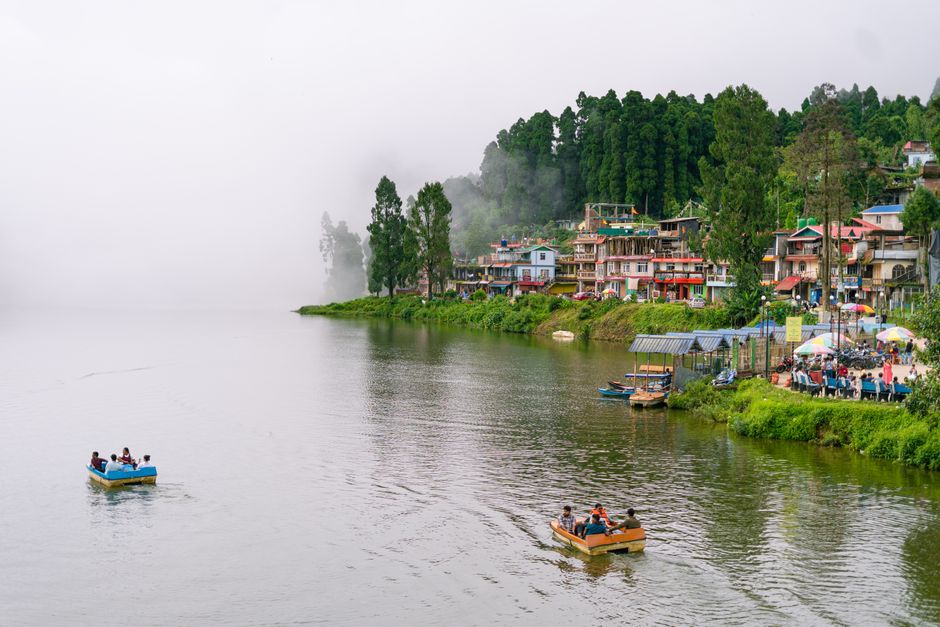
For a family with kids under 12, a state park lodge or cabin with a full kitchen is the best value in 2026. Here’s the math: a 2-bedroom cabin at a state park in the Midwest or Southeast runs $120-$180 a night. It has a kitchen, a fire pit, and direct access to trails or water. You book it direct through the state park website—no Airbnb service fee. You cook most meals. You let the kids run outside. Total cost for a 4-night trip: under $1,200 for lodging and food. That’s less than half what you’d pay for a resort.
If you need more structure—a pool, organized activities, childcare—then a Great Wolf Lodge or a KOA campground with a pool and playground is the better call. You’ll pay more, but you’re buying convenience and entertainment, not just a bed. Great Wolf Lodge runs $200-$400 a night depending on the season, but the water park is included. KOA cabins run $100-$200 a night and the campground vibe keeps kids busy without screens.
The wrong move is booking a standard hotel room for a family of four. You’ll pay $180 a night for a single room, eat every meal out, and spend the evenings trying to keep kids quiet in a hallway. That’s not a vacation. That’s a test of endurance.
Start with the 3-hour radius. Cross off the famous towns. Book direct. Plan one anchor activity a day. Cook your own food. That’s the whole system. It’s not complicated, but it’s also not what the booking algorithms want you to do.