Hungary Travel Tips: 7 Money Mistakes That Drain Your Forint
Most visitors to Hungary lose money before they even leave the airport. Not because of scams. Because of bad defaults. They use the first ATM they see. They buy a paper transport ticket. They book a thermal bath at the door. Fix those three things and you’ve already saved enough for a full dinner at a proper étterem.
I spent two weeks crossing from Sopron to Debrecen. I tracked every forint. The patterns were obvious. Here’s what actually matters.
The Forint Problem Nobody Warns You About
Hungary uses the forint (HUF). Not the euro. Some hotels quote prices in euros, but you’ll pay in forint at a terrible rate if you let them convert it. The conversion request at a card terminal is called Dynamic Currency Conversion (DCC). Always decline it.
Here’s the math. A hotel bill of 40,000 HUF. If you accept DCC, the terminal converts at roughly 350 HUF per euro. Your bank would give you 390. That’s a 10% hidden fee on a single transaction. Do that five times on a trip and you’ve burned 15,000 HUF — enough for a two-hour soak at Rudas.
The same rule applies to ATMs. Euronet machines sit outside every metro station in Budapest. They look official. They are not. They charge 3,000–4,500 HUF per withdrawal and offer conversion rates 8–12% worse than mid-market. Walk past them. Use OTP Bank or Erste Bank ATMs inside actual bank branches.
Your card matters more than your destination. Revolut and Wise both hold forint balances and convert at interbank rates with no weekend markup on major currencies. A standard Chase or Bank of America debit card adds 3% foreign transaction fees. Over a 10-day trip spending 300,000 HUF, that’s 9,000 HUF — gone.
Budapest Transport: The 72-Hour Mistake
Tourists buy the wrong pass. Every time. They buy a 72-hour Budapest Card because it includes “free transport” and “discounts.” Then they ride the metro four times and never use the discounts.
Here’s the comparison:
| Option | Price | Best For | Verdict |
|---|---|---|---|
| Single ticket | 450 HUF | 1–2 rides per day | Waste of money if you move around |
| 10-trip block | 4,000 HUF | 3–4 days, light use | Good middle ground |
| 72-hour travelcard | 5,500 HUF | Heavy metro/tram use | Best value for most tourists |
| Budapest Card 72h | 14,990 HUF | Museum-heavy itinerary | Only worth it if you visit 3+ paid museums |
The 72-hour travelcard works on all BKK lines — metro, trams, buses, and the HÉV suburban rail within city limits. Buy it on the Budapest Go app. You scan a QR code at station entrances. No paper. No validation machine anxiety. The app also shows real-time departures, which beats standing on a platform guessing.
One more thing: the 100E airport bus is not covered by standard passes. It costs 2,200 HUF separately. If you’re solo, that’s fine. If you’re two or more people, a taxi from the airport costs 12,000–15,000 HUF total and drops you at your door. For three people, the taxi is cheaper per person than the bus plus metro transfer.
Thermal Baths: Book Online or Pay Double
Walk-up prices at Széchenyi Thermal Bath are brutal. A weekday ticket with a cabin costs 12,500 HUF at the door. Book online two days ahead and you’ll pay 9,500 HUF. On weekends, the gap widens to 4,000 HUF or more.
But the real mistake is going to Széchenyi at all if you don’t like crowds. It’s the largest and most famous, which means tour groups, selfie sticks, and a pool bar that feels like a water park. If you want the same mineral-rich water with fewer people, go to Rudas on the Buda side. The rooftop hot tub overlooks the Danube. A weekday evening ticket runs 6,900 HUF. The water comes from the same thermal springs.
Bring your own towel and flip-flops. Rental fees add 2,000 HUF per item. A cheap microfiber towel from Decathlon weighs 200 grams and pays for itself on the first visit.
Where to Eat Without Getting Tourist-Trapped
Váci Street is a trap. Every guidebook says it. People still go. The restaurants there charge 2–3x district prices for goulash that’s been sitting in a warmer since 11 a.m.
Here’s what actually works:
- Eat lunch as your main meal. Most Budapest restaurants offer a napi menü (daily set menu) for 2,500–3,500 HUF. Soup, main, sometimes a small dessert. The same dinner would cost 6,000–8,000 HUF.
- Go to District VII for dinner. The Jewish Quarter has better food at honest prices. Kisüzem, Gettó Gulyás, and Bors GasztroBár all serve real Hungarian food under 4,000 HUF per person.
- Skip the Danube view restaurants. You’re paying 40% extra for a view you can get for free by walking the riverbank with a lángos in hand.
- Buy breakfast at a pékség. Bakeries like Lipóti and Príma sell kakaós csiga (chocolate snail pastry) for 400 HUF. Hotel breakfasts run 6,000–10,000 HUF. Multiply that by five mornings.
A family of four eating every meal at tourist restaurants spends roughly 40,000 HUF per day. The same family eating napi menü lunches and local dinners spends 20,000 HUF. Over a week, that’s 140,000 HUF saved — enough for a full day trip to Lake Balaton with train tickets and lunch included.
Day Trips: The Train Is Better Than You Think
Most visitors book a guided tour to Szentendre or Eger. They pay 25,000–40,000 HUF per person for a bus, a guide with a flag, and 45 minutes of free time. The train does the same route for 2,000–4,000 HUF.
The MÁV app sells tickets directly. Budapest to Szentendre takes 40 minutes on the HÉV line. Budapest to Eger takes 2 hours on an InterCity train. Buy a seat reservation for 300 HUF extra. You’ll get a clean, air-conditioned carriage and arrive at the same place the tour bus does, minus the forced shopping stop.
Lake Balaton is the same story. A Balatonfüred day trip by train costs 5,000 HUF round-trip. The water is warm by July, the promenade is walkable, and the wine bars serve a decent Olaszrizling for 1,500 HUF a glass. Skip the “Balaton Tour” packages. They exist because tourists don’t check train schedules.
When NOT to Visit Hungary
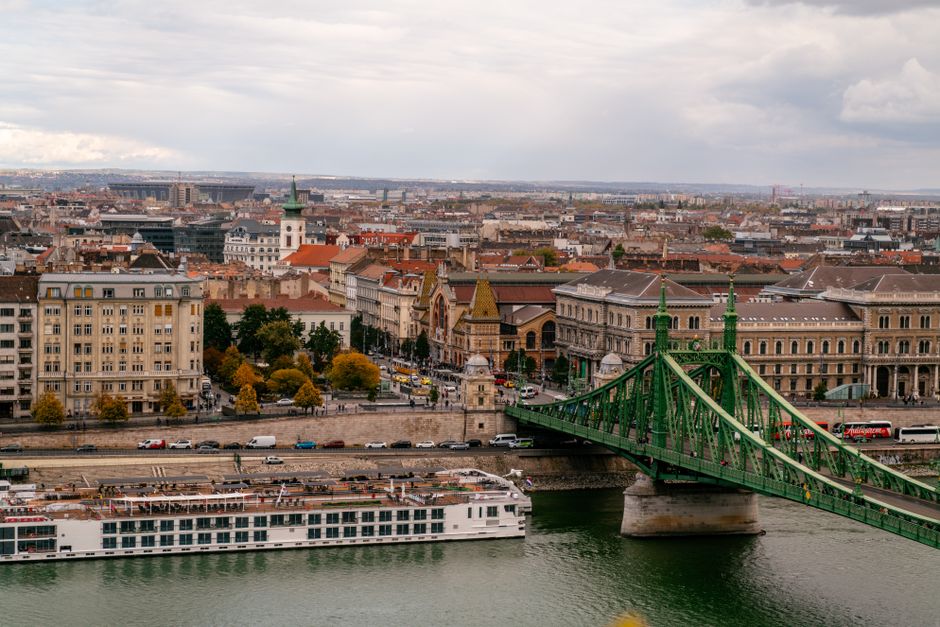
August is the worst month. Budapest empties out as locals flee to Balaton, but tourist crowds peak. Hotel prices jump 30–40%. Thermal baths feel like rush hour. Restaurants near the Basilica run out of everything by 8 p.m.
Szilveszter (New Year’s Eve) is another trap. Clubs charge 20,000 HUF cover. Restaurants run fixed menus at 3x normal prices. The fireworks are fine. The markup is not.
The sweet spot is May and September. Water in the baths is still hot. Outdoor terraces are open. Hotel prices drop 25% from summer peaks. You can walk into any restaurant without a reservation. September is also harvest season in Tokaj and Eger — wine festivals run every weekend, and most tastings are free with a glass purchase.
The Short Version
Decline every currency conversion offer. Use a forint-denominated card. Buy the 72-hour travelcard on Budapest Go. Book baths online. Eat lunch as your main meal. Take trains for day trips. Go in May or September.
Do those seven things and Hungary becomes one of the cheapest countries in Central Europe. Ignore them and you’ll wonder why your “budget trip” cost more than Vienna. The forint doesn’t drain itself. Bad defaults do.