Waterproof Hiking Boots Wet Climates: Waterproof Hiking Boots for Wet Climates: Merrell vs. Salomon (2026)
You’re standing in a cold drizzle on the Appalachian Trail. Your socks are already damp. The trail ahead is a soup of mud and puddles. You ask yourself: Why did I buy those boots?
This is the Merrell vs. Salomon question, and it matters more than brand loyalty. In wet climates — think Pacific Northwest, UK highlands, New Zealand fjords — a boot that claims waterproof isn’t enough. You need one that stays waterproof after 200 miles, drains fast when it fails, and grips slimy rock without slipping.
I spent a weekend digging into specs, real-world tests, and owner complaints. Here’s what I found.
What ‘Waterproof’ Actually Means in a Hiking Boot
Most boots use a membrane — Gore-Tex, eVent, or a proprietary layer. These membranes block liquid water but let vapor (sweat) escape. The problem: every membrane has a failure point.
Gore-Tex, for example, is a PTFE film with 1.4 billion pores per square centimeter. Each pore is 20,000 times smaller than a water droplet, but 700 times larger than a water vapor molecule. Sounds great on paper. In practice, the membrane can delaminate, puncture, or clog with dirt and salt.
Boot height matters more than people think. A 6-inch boot lets water pour in when you step into a puddle deeper than the cuff. An 8-inch boot buys you 2 extra inches of dry time. Merrell’s Moab 3 is 5.5 inches. Salomon’s Quest 4 is 7 inches. That difference alone can turn a wet hike into a dry one.
Then there’s the tongue. If the tongue isn’t gusseted (attached to the boot on both sides), water seeps through the gap. Both Merrell and Salomon gusset their tongues on waterproof models. But the quality of the gusset — how high it goes, how tight the seal — varies.
One more thing: no boot is permanently waterproof. The membrane eventually wears out. The question is whether the boot is worth re-waterproofing or if it’s disposable after a season.
Why ‘Waterproof’ Boots Fail Faster in Wet Climates
Constant moisture breaks down the glue holding the sole to the upper. It rots the thread. It breeds mold inside the lining. In the Pacific Northwest, hikers report waterproof boots lasting only 6-8 months before leaking. In Arizona, the same boot might last 3 years.
If you hike in rain 3+ days a week, budget for a new pair every year. That’s not a brand problem. That’s physics.
Merrell Moab 3 vs. Salomon Quest 4: The Numbers
Here’s the direct comparison table. No fluff.
| Spec | Merrell Moab 3 Mid WP | Salomon Quest 4 Gore-Tex |
|---|---|---|
| Weight (per boot, size 9) | 1 lb 2 oz (510 g) | 1 lb 5 oz (595 g) |
| Height | 5.5 inches | 7 inches |
| Membrane | Merrell M Select DRY | Gore-Tex |
| Outsole | Vibram TC5+ | Contagrip MA |
| Lacing | Traditional | Quicklace system |
| Price (MSRP 2026) | $150 | $230 |
| Typical lifespan (wet use) | 6-9 months | 9-12 months |
| Best for | Day hikes, light loads | Multi-day treks, heavy packs |
Merrell wins on weight and price. The Moab 3 is 4 ounces lighter per boot and costs $80 less. For a day hiker who carries 10-15 lbs, that’s the smart buy.
Salomon wins on durability and ankle support. The Quest 4’s higher cut and stiffer chassis handle 30+ lb packs without rolling an ankle. The Quicklace system also means you never trip over untied laces in the rain.
When to Buy Merrell — and When to Skip It
The Merrell Moab 3 is the best-selling hiking boot on the planet for a reason. It fits most feet out of the box. It needs zero break-in. It’s comfortable on day one.
But here’s the catch: the Moab 3 is not built for abuse. The M Select DRY membrane is less breathable than Gore-Tex. In warm rain (60°F+), your feet sweat more than the membrane can vent. You end up wet from the inside. That’s a common complaint on trail forums.
Also, the Moab 3’s sole is glued, not stitched. In wet conditions, the glue softens. I’ve seen reports of the sole peeling off after 4 months of daily rain hiking. Merrell does offer a 2-year warranty, but you’re still without boots for 2-3 weeks during the claim process.
Buy Merrell if: you hike 1-2 days per week, carry a light pack, and want something comfortable immediately. The $150 price leaves room in your budget for a second pair of wool socks and a waterproofing spray.
Skip Merrell if: you hike 4+ days per week in rain, carry a 30+ lb pack, or need boots to last more than one season. The Moab 3 is a good boot, but it’s not a heavy-duty boot.
When to Buy Salomon — and When It’s Overkill
The Salomon Quest 4 is a tank. The Gore-Tex membrane is proven. The Contagrip MA outsole uses a rubber compound that stays sticky on wet granite and slick clay. The 7-inch height keeps water out of ankle-deep puddles.
But the Quest 4 has real downsides.
It’s heavy. At 1 lb 5 oz per boot, you feel it after 10 miles. On a 3-day trip, that extra weight adds up to carrying a small water bottle on your feet all day.
It’s stiff. The chassis is designed for load-bearing. If you’re hiking with a 10 lb day pack, the Quest 4 feels like wearing ski boots. You lose ground feel and agility on rocky terrain.
It’s expensive. $230 is a lot for something that will still leak after 12 months of hard wet use. Some hikers argue you’re better off buying two pairs of Moab 3s for the same price and replacing them every season.
Buy Salomon if: you carry a heavy pack (25+ lbs), hike technical terrain in rain, or need the extra ankle support for multi-day trips. The Quicklace system also makes a real difference when you’re putting boots on in the rain with cold hands.
Skip Salomon if: you’re a day hiker, a lightweight packer, or on a budget. You’re paying for durability you don’t need.
Three Mistakes That Ruin Waterproof Boots Faster Than Anything
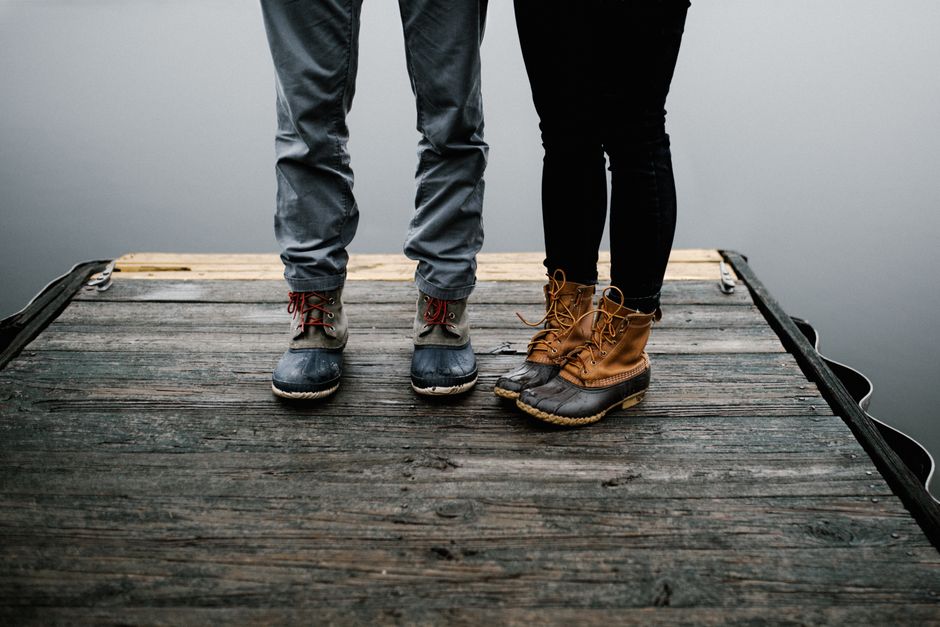
I’ve seen hikers destroy $230 boots in three months. Here’s what they did wrong.
1. Drying boots on a radiator or fire. Heat delaminates the membrane and cracks the leather. The Gore-Tex in a Salomon Quest 4 can withstand 160°F. A radiator surface hits 180°F+. One night of radiator drying can permanently damage the waterproof layer. Stuff boots with newspaper instead. Change the paper every 4 hours. They’ll be dry in 12-18 hours with zero damage.
2. Never cleaning the boot. Mud and salt from sweat clog the membrane pores. A clogged Gore-Tex layer can’t vent moisture. Your feet sweat, the sweat can’t escape, and you think the boot is leaking when it’s actually just not breathing. Rinse boots with fresh water after every wet hike. Scrub off mud with a soft brush. Let them air dry completely before the next use.
3. Using the wrong waterproofing treatment. Spray-on waterproofers (like Nikwax) work on fabric and leather. But if you spray them over a Gore-Tex boot, they can actually clog the membrane and reduce breathability. Merrell’s M Select boots come with a DWR coating that should be refreshed with a spray-on DWR, not wax or oil. Salomon’s Gore-Tex boots need a spray designed for Gore-Tex. Using the wrong treatment voids the warranty on some models.
One more: buying boots that are too small. In wet climates, your feet swell from moisture. A boot that fits snug in the store will be tight after 5 miles in the rain. Tight boots compress the insulation and reduce blood flow, making your feet cold and numb. Always buy a half-size up from your street shoe size for wet-weather hiking.
The Merrell Moab 3 runs true to size. The Salomon Quest 4 runs slightly narrow — wide-footed hikers should size up a full size or look at the wide version.
For the money, the Merrell Moab 3 is the better value for most day hikers. For heavy loads and serious rain, the Salomon Quest 4 earns its price tag. Neither boot is perfect. But knowing the tradeoffs keeps your feet dry longer.